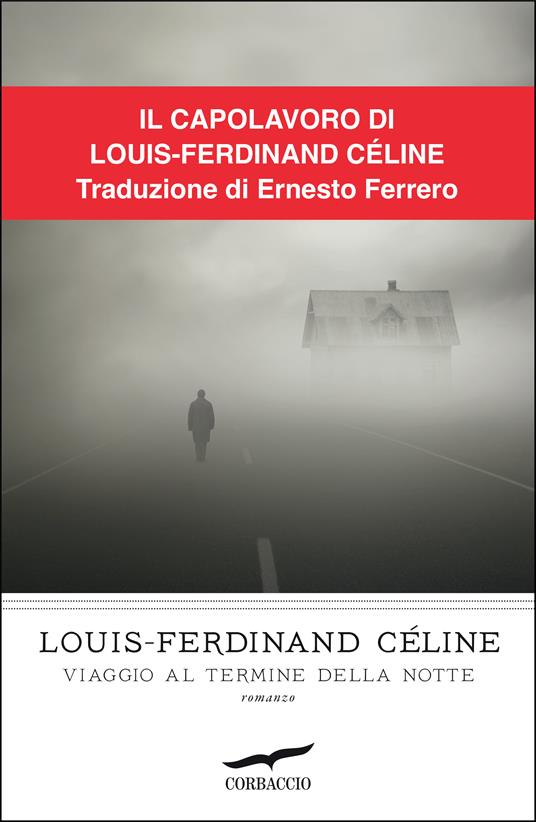
A Descent into the Absurd: The Genesis of Viaggio Al Termine Della Notte
Louis-Ferdinand Céline's seminal work, Viaggio Al Termine Della Notte (Journey to the End of the Night), published in 1932, is more than just a novel; it's a visceral scream against the backdrop of a disillusioned Europe. Penned by Louis Destouches—a doctor residing in Montmartre who adopted the pseudonym Céline in homage to his beloved maternal grandmother—this debut novel was immediately recognized by publisher Robert Denoël as "impossible to classify due to its originality." It introduced a literary voice that was imaginative, hallucinatory, and relentlessly preoccupied with the idea of death, both personal and universal.
Céline crafted Viaggio between 1929 and 1932, a period profoundly marked by global turmoil. The Great Depression had cast its long shadow, triggering widespread unemployment and deep-seated anxiety, even in France, albeit to a lesser extent than elsewhere. This era was characterized by a gnawing suspicion that war was no longer an anomalous tragedy but a cyclical, natural state, plunging an entire generation into anguish about a future darker than ever before. The novel is thus a testament to the bewilderment of a man grappling with the early 1920s, a tormented veteran's chronicle, and the literary and social outcry of an eternal survivor. To understand the man behind this groundbreaking work, delve deeper into From Doctor to Céline: The Anguish Behind "Viaggio al termine della notte".
Ferdinand Bardamu: The Unheroic Journey Through War and Despair
At the heart of Viaggio Al Termine Della Notte lies Ferdinand Bardamu, the novel's narrator and protagonist—a figure whose journey begins with a naive, almost accidental, enlistment in the French army during the First World War. Leaving his life in Place de Clichy, Bardamu plunges into a landscape populated by despairing men and places: unimaginative colonels, enraged generals, and forgotten villages where civilians merely "float somewhere in the night." This is not a war of heroic grandeur, but a chaotic, senseless slaughter, experienced through the eyes of a man who constantly questions its purpose and validity.
The novel's structure, though chronological, is famously episodic and cyclical, a characteristic keenly observed by Henri Godard. Each episode in Bardamu's journey—be it through the trenches of World War I, the colonial horrors of Africa, the industrial squalor of Detroit, or the impoverished Parisian suburbs—tends to follow a pattern:
- It begins with a misstep, a gaffe, a miscalculated challenge, or an outburst of temper.
- This propels Bardamu into a tragicomic ballet of difficult or desperate situations.
- From these predicaments, he emerges, always with difficulty, and always provisionally.
In between these struggles, there's an accumulation of obstacles and threats, ominous signs foreshadowing escalating drama, and the lucid, bitter despondency of Bardamu's reflections. He is the ultimate anti-hero, not seeking glory or meaning, but merely survival, often with a profound sense of disgust for humanity's follies. This powerful blend of farce and tragedy makes Viaggio Al Termine Della Notte a work of immense complexity, where the laughter often serves as a jarring counterpoint to the underlying horror.
Céline's Revolutionary Prose: The Jazz of Despair
Perhaps as revolutionary as its themes is Céline's prose in Viaggio Al Termine Della Notte. It is a style described as an "untranslatable jazz," characterized by relentless syntactical and semantic ruptures and a continuous intermingling of various registers. This creates an effect of estrangement, suspension, and not infrequently, profound surprise. Céline shatters conventional literary language, opting instead for a raw, spoken, often vulgar patois that mirrors the chaotic internal world of Bardamu and the external chaos he navigates.
This "jazz-like" rhythm is not merely stylistic flourish; it is integral to the novel's power. It immerses the reader directly into Bardamu's tormented consciousness, where thoughts are fragmented, emotions are raw, and the world appears as a grotesque, disjointed spectacle. The constant shifts in tone—from philosophical musings to crude humor, from poetic despair to cynical observations—keep the reader off balance, much like Bardamu himself. It's a linguistic assault that demands engagement, reflecting the brutal realities Céline depicts without softening their edges.
The challenge of translating such a unique voice is immense. Ernesto Ferrero, for instance, rendered it in Italian for Corbaccio in 1992 through "a low, spoken Italian, substantially from the Padana area," aiming to capture its visceral, grounded quality. This particular stylistic innovation is one of the many reasons why Decoding "Viaggio al termine della notte": Its Unique Prose and Timeless Impact offers further insights into its enduring legacy.
Enduring Echoes: Why Viaggio Al Termine Della Notte Still Resonates
Despite being published nearly a century ago, Viaggio Al Termine Della Notte continues to exert a powerful pull on readers and scholars alike. Its themes are disturbingly timeless: the senselessness of war, the profound alienation of the individual, the struggle for dignity in a world devoid of inherent meaning, and the constant dance between cruelty and fleeting moments of human connection.
Céline's ability to expose the raw underbelly of human nature, to dissect societal hypocrisy with surgical precision, and to portray the psychological toll of conflict and despair remains acutely relevant. In an age still plagued by conflict, economic instability, and widespread social anxiety, Bardamu's cynical, yet deeply empathetic, observations about the human condition echo loudly. The novel serves as a stark reminder that even amidst the darkest despair, there is a strange, unsettling humor to be found, a coping mechanism that makes the unbearable momentarily tolerable.
For those seeking a profound, albeit challenging, literary experience, Viaggio Al Termine Della Notte offers an unflinching look into the depths of the human soul. It's not an easy read, but its originality, its stylistic audacity, and its enduring thematic relevance cement its place as a cornerstone of 20th-century literature. It compels readers to confront uncomfortable truths about themselves and the world, making it an essential, if unsettling, journey for any serious reader.
Viaggio Al Termine Della Notte stands as a monumental achievement, a harrowing yet darkly humorous exploration of the human spirit's endurance in the face of overwhelming despair. Céline's revolutionary prose and Bardamu's unforgettable journey ensure its status as a timeless classic, continually challenging our perceptions of war, society, and the very meaning of existence. It is a journey worth taking, even to the end of the night.