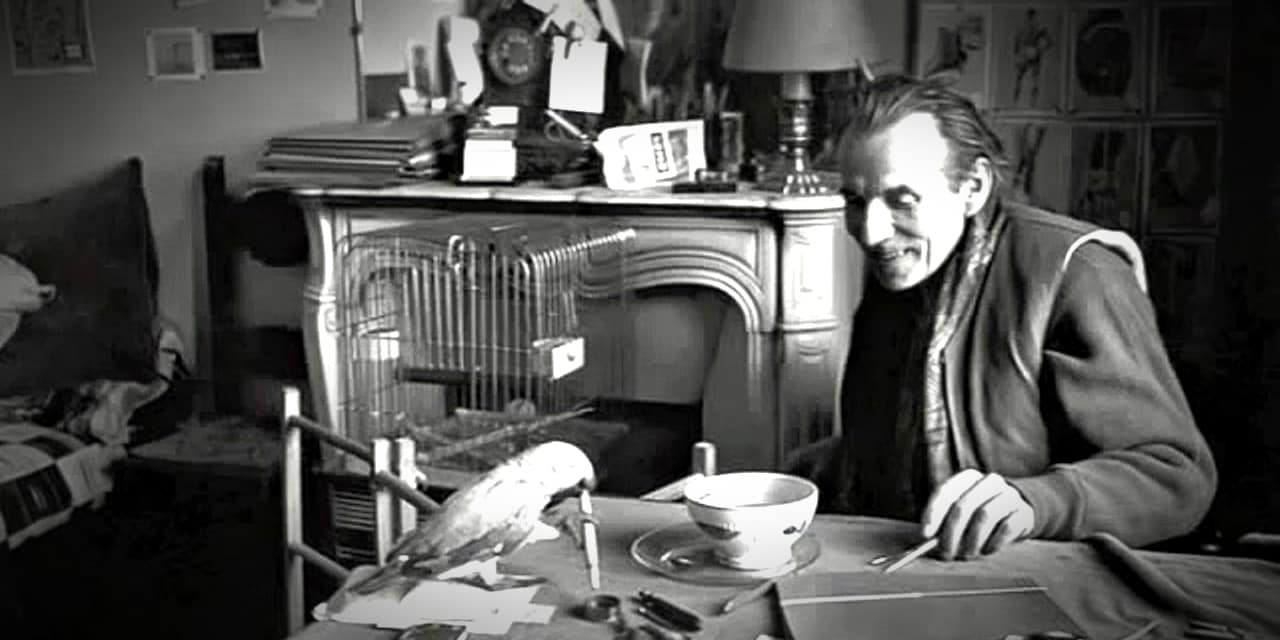
From Doctor to Céline: The Anguish Behind "Viaggio al termine della notte"
The journey from a meticulous medical practice on rue Lepic to the anarchic, groundbreaking prose of
Viaggio Al Termine Della Notte is a tale as compelling as the novel itself. In 1932, a thirty-five-year-old physician named Louis Destouches, working diligently at the Clichy dispensary, chose to shed his professional identity for a literary alter ego. Adopting the evocative, partly feminine pseudonym Louis-Ferdinand Céline—a homage to his beloved maternal grandmother—he unleashed upon the world a literary masterpiece that would redefine modern literature.
Publisher Robert Denoël, recognizing the profound originality of the manuscript, declared it "impossible to classify." He saw in Céline's writing an "imaginative, hallucinated" voice, where the chilling idea of death—both personal and global—resurfaced relentlessly. This introduction marked the arrival of a writer whose vision was as bleak as it was brilliant, a physician who diagnosed not just physical ailments but the deep, existential malaise of an entire generation.
From Louis Destouches to Céline: The Birth of a Literary Voice
Louis Destouches's life as a doctor provided him with a unique, unvarnished perspective on human suffering and resilience. Operating from a dispensary in the working-class Parisian suburb of Clichy, he was intimately acquainted with poverty, illness, and the daily struggles of ordinary people. This direct engagement with the harsh realities of life, far from the intellectual salons, imbued his observations with a raw authenticity that would become the hallmark of Céline's literary voice.
The period during which Céline penned
Viaggio Al Termine Della Notte, between 1929 and 1932, was a crucible of global unrest. It was the era of the Great Depression, an economic cataclysm that, while perhaps less severe in France than in America, still brought widespread unemployment, social unrest, and a pervasive sense of unease. For Céline, who had personally experienced the horrors of World War I as a wounded veteran, these societal anxieties converged with his own profound disillusionment. His choice of a pseudonym was not merely a stylistic flourish; it represented a transformation, a deliberate move to distance himself from the scientific detachment of medicine and embrace the visceral, often messy, truth of human experience. It was during this period of societal and personal turmoil that the "eternal survivor," as his work would often describe him, found his most potent form of revolt in literature.
An Anguished Epoch: The World Reflected in "Viaggio Al Termine Della Notte"
Céline's debut novel is more than a personal account; it is a profound testament to the collective anguish of the interwar period. The shadow of the Great War loomed large, leaving behind not just physical scars but a deep psychological trauma that permeated European society. The optimism of the Belle Époque had vanished, replaced by a cynical weariness and a gnawing suspicion that conflict was not an aberration but a recurring, perhaps even natural, state of human affairs. This foreboding sense of an "avenir plus cupo che mai" (a future darker than ever) cast a long pall over an entire generation, fueling a pervasive sense of despair and insecurity.
Viaggio Al Termine Della Notte captures this existential dread with brutal honesty. It is the cry of a tormented veteran, the delirium of an unsatisfied soul, and a searing indictment of the absurdity and cruelty of a world seemingly hurtling towards another inevitable catastrophe. The novel’s protagonist, Ferdinand Bardamu, serves as the embodiment of this widespread disillusionment. His cynical observations and frantic escapes mirror the widespread sense that life had become a chaotic, meaningless struggle, where virtue was often punished and survival itself felt like a cruel joke. Céline masterfully channels the prevailing anxieties of his time, transforming personal trauma into a universal narrative of human fragility and societal decay.
The Unmistakable Rhythm: Céline's Revolutionary Prose and Bardamu's Journey
At the heart of
Viaggio Al Termine Della Notte lies Céline's revolutionary prose, often described as an "untranslatable jazz." This style defies conventional literary norms, opting for syntactic and semantic ruptures, and a fluid, almost improvisational shifting between various registers. The effect is one of profound estrangement, a constant suspension of expectations, and frequent moments of stark surprise. Rather than polished sentences, Céline offers a raw, vernacular stream of consciousness that mirrors the chaotic internal monologue of his protagonist. As Ernesto Ferrero, the translator of the 1992 Italian edition, eloquently put it, he rendered this style through "an Italian spoken low from a substantially Padanian area," capturing the earthy, unrefined voice that was so central to Céline's vision.
The narrative structure of the novel, though chronological, unfolds in a series of unnumbered episodes, each beginning with Ferdinand Bardamu's characteristic misstep—an error, a gaffe, a miscalculated challenge, or a sudden burst of temper. These initial blunders plunge him into a "tragicomico balletto" (tragicomic ballet) of difficult or desperate situations, from which he emerges only temporarily and with immense effort. Along the way, obstacles accumulate, ominous signs foreshadow further drama, and Bardamu is left with lucid, bitter reflections on the futility of it all. This cyclical pattern of hope, failure, and cynical introspection defines Bardamu's arduous path from the battlefields of World War I, where he volunteers and encounters "colonelli senza immaginazione, generali rabbiosi, villaggi e civili che galleggiano da qualche parte nella notte," through the various dismal corners of the world he inhabits.
Yet, despite its grim subject matter,
Viaggio Al Termine Della Notte is also "un’opera potentemente comica in cui farsa e tragedia continuamente si mescolano." The humor, often dark, grotesque, and satirical, is not merely a relief from the nightmare but an integral part of it. It’s the bitter laugh of a man who sees through the pretensions and hypocrisies of society, finding absurdity even in the face of annihilation. For a deeper dive into this unique blend of sorrow and humor, explore
Viaggio al termine della notte: Céline's Comic Tragedy of War and Despair. The revolutionary style is also fascinating, as detailed in
Decoding "Viaggio al termine della notte": Its Unique Prose and Timeless Impact.
Enduring Echoes: Why "Viaggio Al Termine Della Notte" Resonates Today
Over nine decades since its initial publication, first in France and swiftly in Italy in 1933 thanks to Enrico dall'Oglio,
Viaggio Al Termine Della Notte continues to exert a powerful pull on readers and writers alike. Its themes of disillusionment, the absurdity of war, the individual's struggle against an indifferent or hostile world, and the search for authentic meaning in a decaying society remain profoundly relevant.
Céline's novel served as a precursor to many literary movements, influencing existentialists, absurdists, and even the Beat Generation with its raw, confessional style and its unflinching gaze into the darker corners of the human psyche. It challenges readers to confront uncomfortable truths about humanity, power, and the cyclical nature of conflict.
For those venturing into this literary landmark for the first time, here are a few practical tips:
- Embrace the Flow: Don't try to force a conventional narrative structure onto Céline's prose. Allow yourself to be carried by the current of Bardamu's consciousness, much like the "untranslatable jazz."
- Appreciate the Dark Humor: The novel is grim, but its comedy is potent. Look for the satirical jabs, the ironic observations, and the moments where the sheer absurdity of life elicits a grim laugh.
- Context is Key: While the novel's themes are universal, understanding the historical backdrop of the interwar period—the trauma of WWI, the economic crisis, and the rise of political extremism—enriches the reading experience.
- Read Aloud (or Imagine Doing So): Céline's prose has an oral quality. Reading passages aloud can help you grasp its unique rhythm and cadence.
- Prepare for Unflinching Honesty: This is not a feel-good book. It delves into the ugliness of humanity, but it does so with an honesty that can be both disturbing and profoundly enlightening.
Conclusion
More than just a novel,
Viaggio Al Termine Della Notte is a raw, unflinching mirror held up to the human condition, a testament to the enduring power of literature to grapple with the deepest anxieties of its time. From the clinic in Montmartre to the desolate battlefields and disillusioned streets, Louis Destouches' transformation into Céline gave voice to a profound anguish, but also to a defiant, darkly humorous spirit of survival. Its revolutionary prose and timeless insights ensure that Bardamu's journey to the "end of the night" remains an essential, albeit challenging, expedition for any serious reader of world literature.